[Forbes Korea] K-EdTech’s 'Hyper-Personalization' Innovation
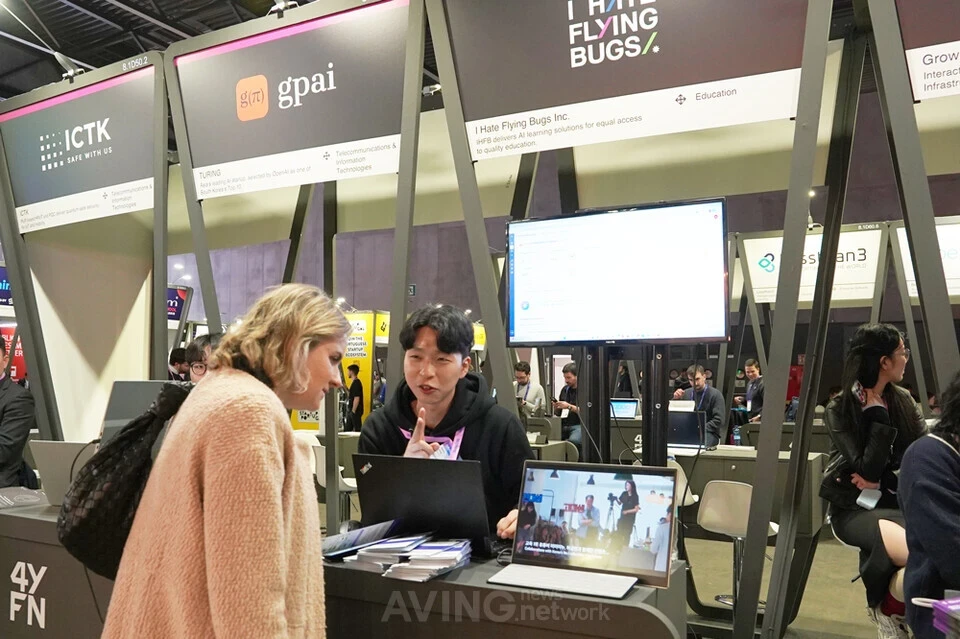
IHFB was featured in Forbes Korea’s list of the Top 30 EdTech Companies in South Korea.
[2026 KOREA’S EDUTECH 30 ③]
Forbes Korea announces the “Korea’s Edutech 30” by evaluating the technological maturity and market impact of Korean edutech companies to determine their potential to become global leaders. The selected companies are integrating cutting-edge technologies—such as generative AI, large language models (LLMs), and immersive content (AR and VR)—into education, and are seeking full-scale expansion beyond the domestic market into global markets including North America, Southeast Asia, and Europe.
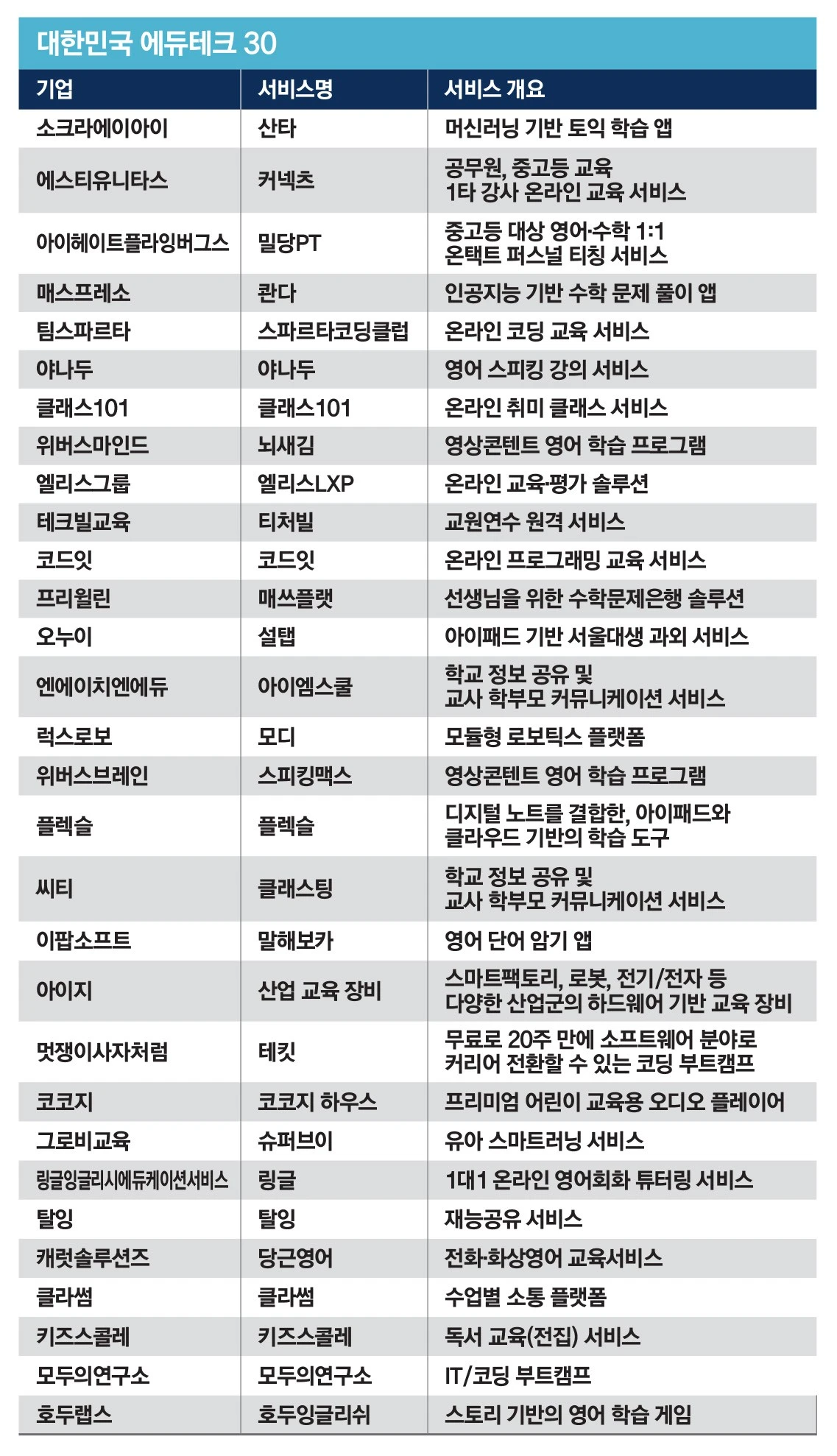
The key trends common to the companies selected for Forbes Korea’s “Korea EdTech 30” are: ▶ hyper-personalization, ▶ immersive, realistic education, ▶ expansion of the B2B and public education ecosystems, and ▶ enhancement of teachers’ competencies. While e-learning in the past was an innovation in “delivery methods” that eliminated the constraints of physical space, today’s edtech has achieved an innovation in “hyper-personalization and maximizing educational effectiveness” by analyzing learner data in real time to provide optimal curricula.
The Korean education market serves as the most robust “test bed” for edtech companies. This is because the vast amount of learning data generated by the fiercely competitive college entrance exam environment has served as the foundation for refining AI algorithms. Furthermore, the demands of parents and students—who are highly sensitive to content quality and learning outcomes—have driven domestic companies to develop world-class UI/UX and high-quality content. Furthermore, the government’s efforts to integrate edtech into the public education system as a core component—rather than merely as a supplementary tool—have also played a significant role. As a result, Korea’s edtech sector is taking the lead in implementing innovations aimed at bridging the academic achievement gap and providing personalized education—challenges faced worldwide—and, having undergone market validation, is now actively expanding into the global market.
Methodology
We extracted Korean startups and mid-sized companies from The VC’s corporate information database whose descriptions of key technologies or products included the keyword “education.” A total of 300 companies were initially selected as candidates, and those lacking evaluation metric data or failing to meet other selection criteria were filtered out. We then used the number of registered patents, amount of investment raised, number of employees, and revenue (as of 2024) of the candidate companies as evaluation metrics. Based on the resulting evaluation index, we reviewed recent business performance, management maturity, and global market potential to select the final 30 companies as the “Korea EdTech 30.”
Socrates AI
Service Name: Santa / CEO: Park Soo-young / Number of Employees: 145 / Cumulative Investment: 284 billion won
Socrates AI’s “Santa” is an AI-powered TOEIC learning platform equipped with machine learning-based learning analytics and an adaptive recommendation engine. Its core technology involves analyzing user data to diagnose weak areas in real time and optimize individual problem-solving strategies and learning sequences. This sophisticated, personalized solution has led to high repeat purchase rates and corporate partnerships in the test-prep English education market, demonstrating strong profitability. As of 2025, it has surpassed 4.87 million cumulative global users and is rapidly expanding its dominance in overseas markets based on overwhelming data competitiveness—notably, transaction volume in Japan surged 64% year-over-year.
ST Unitas
Service Name: Connects / CEO: Kim Jeong-taek / Number of Employees: 244 / Cumulative Investment: 152.9 billion won
ST Unitas’ “Connects” is a knowledge-sharing platform that combines a “short-term high-score methodology”—derived from analyzing vast amounts of big data on high-scoring students—with the AI technology “Stella.” Its core features include an AI search engine that provides answers within 5 seconds when users upload photos of questions they don’t know, and technology that precisely analyzes and addresses individual weaknesses. From a market perspective, the company boasts strong brand power thanks to its overwhelming portfolio of star instructors’ intellectual property (IP) in exam preparation fields with steady demand, such as civil service and language proficiency tests. In particular, it is accelerating service enhancement by announcing a roadmap to boost work productivity through AI by 2026. The company has established a virtuous cycle where exam success stories are converted into data to further strengthen its algorithms.
I Hate Flying Bugs
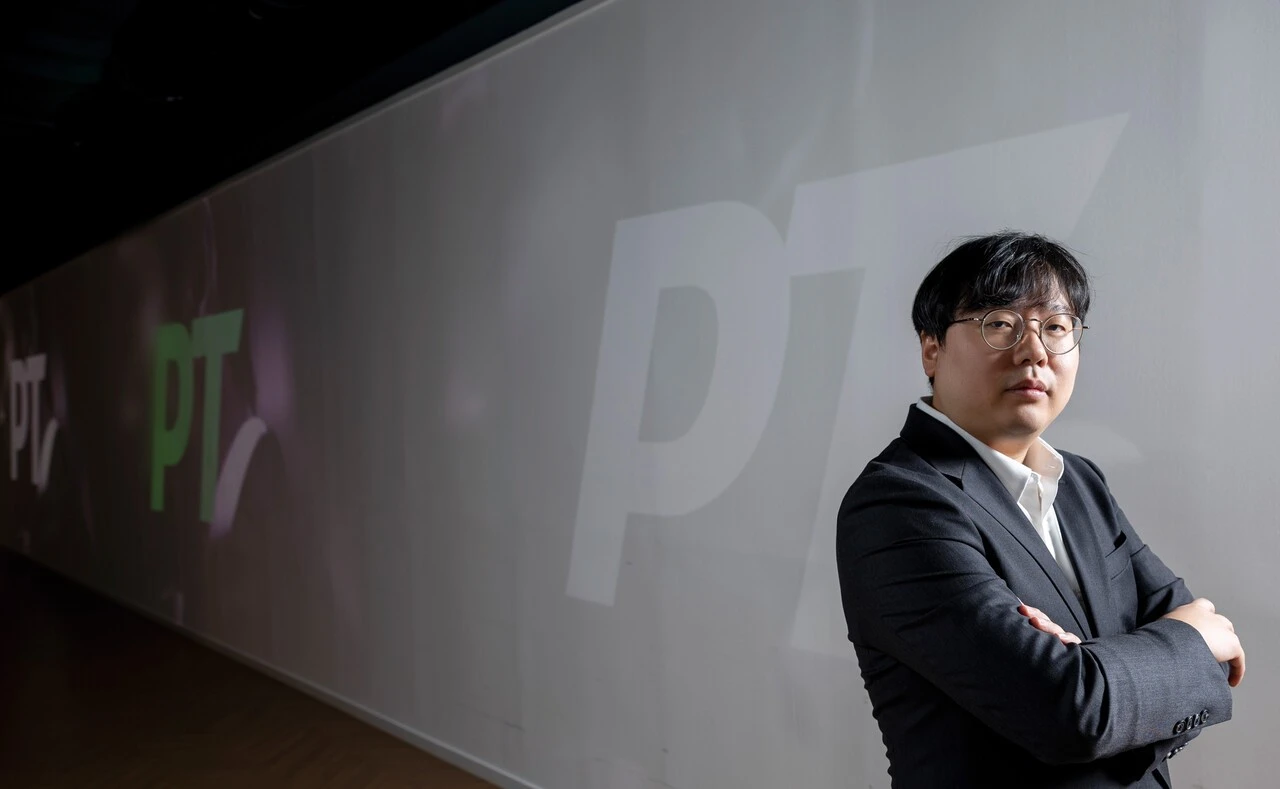
Service Name: Mil-dang PT / CEO: Park Chan-yong / Number of Employees: 318 / Cumulative Investment: 84.5 billion won
I Hate Flying Bugs is leading the digital transformation of the domestic education market through its “AI Ontact Management” technology, which is based on 1.3 billion pieces of learning data. Its core technology is an adaptive learning engine that analyzes learners’ weaknesses in real time to predict achievement levels with over 90% accuracy. In particular, the company has demonstrated the practical effectiveness of its technology by raising the online course completion rate to 96% through a “human-AI collaboration model,” in which AI designs the curriculum while human tutors provide emotional support. In terms of market potential, the company has established a foothold in the public education (B2G) market based on its success in the B2C sector. In collaboration with Korea University, it was selected as the lead developer for an AI-powered digital textbook (AIDT) for middle school mathematics, and is implementing an “AI Suit” strategy to assist teachers by deploying “SchoolPT” to over 1,400 schools nationwide. Its global expansion is also taking shape; while showcasing its technological capabilities on international stages such as MWC 2026, the company is simultaneously conducting negotiations on technology exports with key countries in Latin America and Southeast Asia. Having recently finalized its IPO underwriters, the company has moved beyond the “pre-unicorn” stage and entered the preparation phase for its initial public offering.
Masspresso
Service Name: Qanda / CEOs: Lee Yong-jae, Lee Jong-heun / Number of Employees: 75 / Cumulative Investment: 164.4 billion won
Masspresso operates “Qanda,” an AI learning platform with 100 million subscribers worldwide. Its core technologies include a proprietary OCR (Optical Character Recognition) engine and MathGPT, a large language model specialized in mathematics developed in collaboration with Upstage and KT. Notably, MathGPT has demonstrated logical reasoning performance that surpasses ChatGPT-4 in global benchmarks, elevating the service beyond simple solution searches to a personalized AI tutoring service. In terms of market potential, the company has continued to achieve double-digit revenue growth year-over-year and has successfully diversified its revenue model. Growth is being driven by “Kwanda Tutoring,” a one-on-one remote tutoring service, and a tablet-based learning agent service. The company is also aggressively expanding globally. With 90% of its total subscribers coming from overseas, Kwanda has gone beyond dominating Asian markets such as Vietnam, Japan, and Indonesia to recently open an office in Berkeley, California. Based on “Cramify,” a new product designed for the North American market, the company is aiming to become a global edtech unicorn.
Team Sparta
Service Name: Sparta Coding Club / CEO: Lee Beom-kyu / Number of Employees: 290 / Cumulative Investment: 13 billion won
Moving beyond its online coding education service “Sparta Coding Club,” Team Sparta has established itself as a comprehensive AI-powered IT talent development platform as of 2026. Its core technologies are the “AI Tutor” and the “Intelligent Q&A System,” both integrated into its proprietary Learning Management System (LMS). Its core competitive advantage lies in a hyper-personalized engine that utilizes large language models (LLMs) to correct learners’ code errors in real time and generate curricula optimized for individual learning progress. Selected as a “Pre-Unicorn” by the Ministry of SMEs and Startups in 2025, the company has secured high profitability by successfully diversifying its business beyond simple coding education to include advanced AI training (B2B) that supports corporate digital transformation (DX) and IT outsourcing development (Sparta Builders) led by its graduates. Through its Japanese subsidiary established in 2023, the company has also successfully launched a B2B training business targeting local publicly traded companies and is expanding its reach into the European market, including the export of its metaverse-based learning environment to Germany. Recently, it launched projects created by its graduates on the global STEAM platform.
Yanadu
Service Name: Yanadu / CEOs: Kim Min-cheol, Kim Jeong-su / Number of Employees: 109 / Cumulative Investment: 80.3 billion won
Yanadu is implementing personalized learning technology by combining large-scale learning data—accumulated over 10 years from 1.7 million students—with large language models (LLMs). Its core technology is an AI tutoring service based on basic vocabulary. It adjusts the difficulty of conversations in real time to match the learner’s vocabulary level and features a coaching function that understands context and corrects mistakes even when learners mix Korean into their speech. Additionally, the company has established a technological framework that supports immediate feedback and the creation of automated learning routines through its digital pad-based “AI Sururu Workbook.” Building on its leading position in the adult English market, the company is expanding its service scope to include corporate training (B2B) and the elementary education market. Recently, it has been promoting localized services targeting Asian markets such as Vietnam and Japan as its first priority, while focusing on developing a new AI-based platform for entry into the North American market.
Class101
Service Name: Class101 / CEO: Gong Dae-seon / Number of Employees: 88 / Cumulative Investment: 77.1 billion won
Class101 is an online subscription platform offering over 5,000 classes covering hobbies, professional skills, and personal finance, with machine learning-based personalized curation technology at its core. In addition to an AI engine that analyzes learners’ course-taking patterns and interests to recommend the best courses, the company has recently been enhancing features such as automatic class summarization using generative AI and a real-time Q&A system for learners. In terms of market potential, the company has secured stable user retention by transitioning from a pay-per-course model to a subscription model. It is diversifying its revenue structure by meeting B2B demand from companies seeking to build internal training infrastructure through “Class101 Business,” its enterprise-focused service. Recently, the company integrated its services in South Korea, the U.S., and Japan into a single platform, breaking down cross-border content barriers. By implementing automatic translation and AI subtitling technologies, it has created an environment where subscribers worldwide can access localized content.
WeaversMind
Service Name: Noesaegim / CEO: Jeong Seong-eun / Number of Employees: 95 / Cumulative Investment: 3 billion won
Noesaegim is an English learning program that combines repetitive video and audio learning with a self-directed review structure; it is a brand that has consistently met the demand for adult self-improvement. WeaversMind possesses cumulative learning data from 2.05 million users and is building its own proprietary AI education solution. Its core technology is a one-on-one conversation service that combines a proprietary AI pronunciation waveform analysis system with generative AI. The company is accelerating its global expansion using its subsidiaries in Vietnam and Japan—established in 2024—as a springboard. It provides localized content optimized for local learning environments.
Ellis Group
Service Name: Ellis LXP / CEO: Kim Jae-won / Number of Employees: 126 / Cumulative Investment: 33.3 billion won
Ellis Group supports the AI transformation (AX) of public education and corporate training through “Ellis LXP,” an educational practice platform based on 1 billion coding learning data points. Its core technologies include “AI Helpi,” a self-developed LLM-based learning assistant chatbot, and a real-time code correction and automatic grading engine based on small language models (sLM). In particular, the company has established a “full-stack AI” system by directly building its own cloud infrastructure—including portable modular data centers (PMDCs)—to provide learners with a seamless, high-performance AI practice environment. In terms of market potential, the company is experiencing rapid growth, having surpassed 9,500 domestic and international adopting institutions and secured 2.75 million cumulative users as of 2026. It has been adopted as a DX (Digital Transformation) training solution by major conglomerates such as Samsung, SK, and Hyundai Motor Company, and serves as a key developer for the AI Digital Textbook (AIDT) initiative, which began in 2025. For its global expansion, the company is focusing on the APAC (Asia-Pacific) market with Singapore as its base. It has achieved success in technology exports, including winning a contract for the Singapore Ministry of Education’s digital textbook development project and forming a partnership with “Cap Vista,” an organization under the Ministry of Defense. Recently, following its participation in CES 2024, the company has been expanding into the North American market and is enhancing global-specific features such as multilingual translation and subtitle generation.
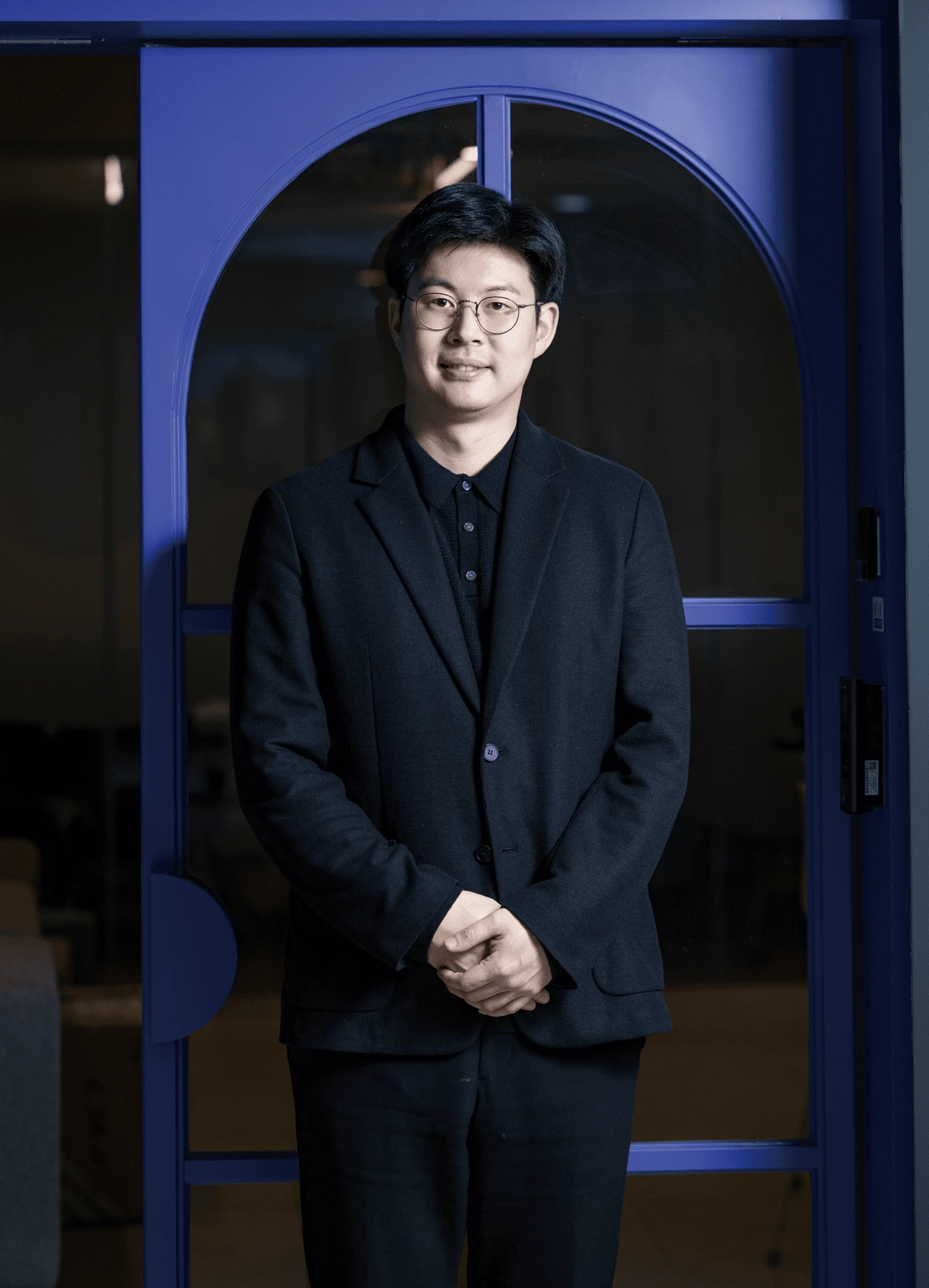
Techvil Education Service Name: TeacherVille / CEO: Lee Hyung-se / Number of Employees: 124 / Cumulative Investment: 900 million won
Techvil Education supports the digital transformation of public education through “TeacherVille,” a platform used by 600,000 educators. Its core technology is an LLM-based administrative and classroom support engine implemented in “Mycl,” an AI assistant designed exclusively for teachers. This engine supports lesson planning, test creation, and the automation of administrative tasks, thereby improving operational efficiency in educational settings. Additionally, the company has established “TELAS,” a SaaS-based learning data platform, laying the technical foundation for the integrated management of learning data in a cloud environment. Building on its No. 1 market share in the teacher training sector, the company has secured stable demand in the corporate and public education (B2G) sectors. Through “Chedders,” an integrated edtech marketplace, it has supplied customized solutions to over 1,400 schools. Recently, it has embarked on global expansion, starting with the Southeast Asian market, and is exporting teacher training platforms and K-edtech content optimized for local educational environments, such as in Vietnam.
Codeit Service Name: Codeit / CEO: Kang Young-hoon / Number of Employees: 125 / Cumulative Investment: 23.8 billion won
CodeIt targets career changers by combining coding, data, and AI into short, systematic online courses and boot camps. Its core technology is an LLM-based AI tutoring system that analyzes learners’ code errors in real time and provides personalized feedback. Recently, the company launched “Kade,” a solution where AI conducts and evaluates the entire interview process, thereby establishing an AI talent infrastructure that bridges learning, evaluation, and hiring. In terms of market potential, the company has successfully diversified its revenue by rapidly capturing B2B training demand from major corporations such as Samsung, Hyundai, and SK. It has secured a solid financial structure and market trust, to the extent that it is pursuing a transition to a public listing alongside a return to profitability by 2026. Global expansion is underway, focusing on English-speaking markets such as North America. The company is challenging the global HR tech market by leveraging “Kade,” its AI competency assessment solution.
FreeWillin Service Name: MathPlat / CEO: Kwon Ki-sung / Number of Employees: 160 / Cumulative Investment: 12 billion won
FreeWillin operates “MathPlat,” a math-specialized learning solution based on 1.1 million in-house-developed questions and over 1.6 billion pieces of grading data. Its core technology involves analyzing individual weaknesses and generating personalized learning paths using machine learning algorithms. Recently, the company has integrated large language models (LLMs) to enhance problem explanations and learning feedback, and has implemented inclusive educational technologies on its platform, such as an AI-powered real-time captioning service for students with hearing impairments. In terms of market potential, it maintains the top market share in South Korea’s math question bank sector, solidifying its unrivaled position. The company has established a firm foothold in the public education sector through “SchoolPlat,” which has been adopted by 9,500 private tutoring centers and approximately 3,600 elementary, middle, and high schools nationwide. In particular, “PuliCampus,” an AI-powered courseware solution for universities, is used as a basic academic proficiency assessment tool at one out of every three four-year universities nationwide and has grown into an educational infrastructure that spans all school-age groups. The company has also recently expanded into the Japanese market. Since the official launch of the Japanese version of MathPlat in 2024, the number of adopters in the local private tutoring sector has been rapidly increasing. It has secured international credibility, including being named one of the “World’s Best EdTech Companies” by Time magazine for two consecutive years.
Onui Service Name: SeolTap / CEO: Go Ye-jin / Number of Employees: 74 / Cumulative Investment: 16.1 billion won
“SeolTap,” operated by Onui, is a one-on-one online tutoring platform that connects students with tutors from prestigious universities, delivering a personalized learning experience through its proprietary Knowledge Map (KC) technology. Its core technology is an AI diagnostic engine that analyzes students’ problem-solving histories to identify learning gaps. The backbone of this technology consists of backward-tracking analysis—which traces the causes of incorrect answers in middle school courses back to elementary school concepts—an incorrect-answer prediction model, and a real-time Q&A AI tutor system powered by large language models (LLMs). In terms of market potential, the company has secured a solid user base in the online tutoring market, with 530,000 cumulative subscribers and a course re-enrollment rate of 88%. As an alternative model aimed at bridging regional educational disparities, it is expanding its services beyond higher education to all school-age groups, thereby increasing the platform’s influence.
NHN Edu Service Name: I’m School / CEO: Kang Yong-hyuk / Number of Employees: 62 / Cumulative Investment: 50.1 billion won
NHN Edu has established a technological framework for the integrated management of digital data from public schools through “I’m School,” Korea’s largest school notice app. Its core technologies include a cloud-based educational data collection and analysis engine and personalized educational information curation powered by large language models (LLMs). The company has developed a system that automatically classifies and distributes school news, parent-teacher communications, and educational content based on student characteristics, and has recently been focusing on advancing data standardization technology to integrate with AI-powered digital textbooks. I’m School has secured partnerships with over 12,000 schools and has 7 million users. It has also recently expanded into the Taiwanese market.
LuxRobo Service Name: MODI / CEOs: Son Seung-bae, Oh Sang-hoon / Number of Employees: 41 / Cumulative Investment: 33.3 billion won
LuxRobo has built an educational environment that integrates hardware and software through “MODI,” a modular coding kit based on its proprietary Micro OS technology. Its core technology is an AI-powered electronic circuit design and control system that allows individual modules to perform independent computational functions while being easily connected via magnets to create complex robotic systems. Recently, the company expanded its technological scope with “MODI Factory,” an AI platform that significantly reduces circuit design time. By attracting a broad user base ranging from elementary school students to engineers, it has established itself as an essential educational tool in the STEAM (interdisciplinary education) market, going beyond coding education. As of 2026, the company is preparing for an initial public offering (IPO) by resubmitting an application for a technology-based listing. Following its participation in international exhibitions such as BETT in the UK and ISTE in the U.S., the company has accelerated its expansion and is currently supplying its solutions to more than 20 countries, including Australia, Italy, and Qatar. In particular, it has expanded its B2G business in emerging markets through initiatives such as workshops in Indian public schools and a collaboration with the Ministry of Education in Côte d’Ivoire.
WeaversBrain Service Name: SpeakingMax / CEOs: Jeong Yeon-joong, Jo Se-won / Number of Employees: 55 / Cumulative Investment: 6.3 billion won
WeaversBrain provides a real-time video-based English conversation service by combining video interview data from 2,332 native speakers with its proprietary AI engine, “Max AI 2.0.” Its core technologies include “Instant Coaching,” where an LLM-based AI tutor corrects learners’ grammar and vocabulary errors in real time, and “MaxFriends,” which uses character-based AI to lower psychological barriers to learning. The company has also established a technological framework that enhances learning persistence through a gamification-based reward system that awards coins redeemable for cash based on learning achievements. Having surpassed 1.2 million cumulative members, the company has solidified its position in the B2C market and is currently expanding its business scope into the B2B English education sector, with its services recently adopted by over 150 major corporations. It recently entered the Japanese market, securing a foothold in the B2B sector by signing contracts with local e-learning companies Manebi and NetLearning, and plans to begin a full-scale expansion into the U.S. market in 2026.
Flexl Service Name: Flexl / CEO: Kwon Jeong-gu / Number of Employees: 32 / Cumulative Investment: 51.3 billion won
Flexl optimizes the digital learning environment based on proprietary interface technology that combines a document viewer with note-taking capabilities. Its core technology is “Gesture Mode,” which allows users to take notes while viewing PDF documents and easily transfer text or images from the document into their notes. Recently, the company has been enhancing its AI capabilities by integrating large language models (LLMs) to summarize document content and provide question-and-answer functionality. It has also established a technology framework that integrates content protection and learning assistance features through the edtech e-book platform “SCONN.” With 9.2 million users worldwide, Flexl maintains a top-tier position in the digital note-taking app sector. By prioritizing multilingual support and an intuitive user experience (UX), the company is expanding its presence as a global digital learning platform. In 2025, it acquired the digital stationery brand “Nalna,” expanding its business scope beyond simple learning tools into the digital productivity and lifestyle markets.
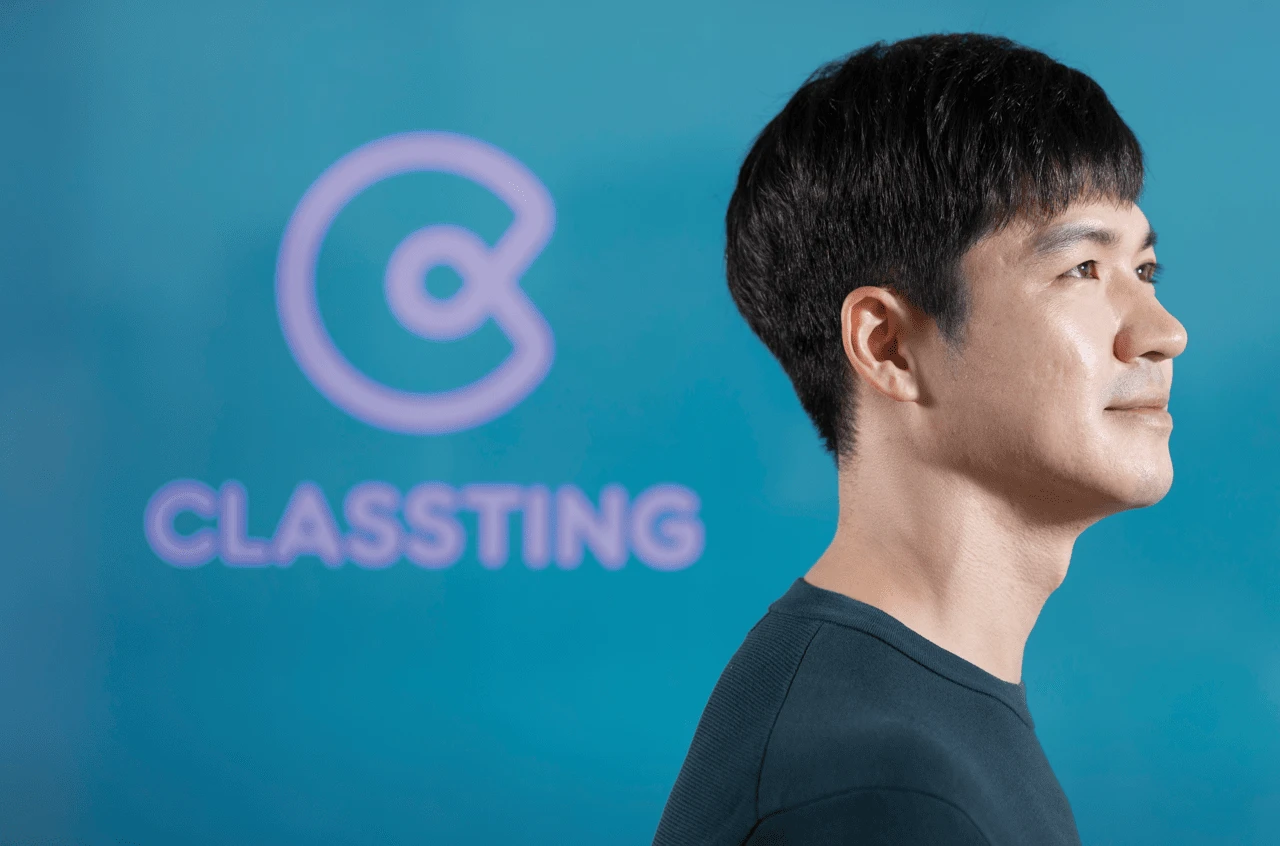
Citi Service Name: Classing / CEO: Jo Hyun-gu / Number of Employees: 44 / Cumulative Investment: 37.1 billion won
Classing is courseware for schools that combines classroom communication, assignments, assessments, and AI-powered learning features. The core technology of Classing’s public education-based Learning Management System (LMS) is the AI engine “CLST,” which combines a Knowledge Tracing model with a Large Language Model (LLM). This engine analyzes students’ correct and incorrect answer data in real time to predict achievement levels with over 91% accuracy and applies Retrieval-Augmented Generation (RAG) technology to support teachers’ lesson planning and personalized learning for students. “Classing AI” is currently being adopted on a paid basis by more than 1,200 schools in South Korea. In particular, the company solidified its position as the standard solution for public education after passing the certification process for the high school mathematics section of the AI Digital Textbook (AIDT)—which took effect in 2025—and being selected as the lead provider. Additionally, it has entered the B2B market by launching “Cognity,” an AI LXP solution for enterprises, as part of its business diversification efforts. Recently, the company has been expanding its supply of AI learning solutions by forming partnerships with educational companies in major Asian countries such as Taiwan, Thailand, and Japan, and has secured over 9 million cumulative users across elementary, middle, and high schools in 47 countries worldwide.
Epopsoft
Service Name: Malhaeboka / CEO: Kim Woo-jun / Number of Employees: 72 / Cumulative Investment: 11.5 billion won
Malhaeboka is an AI-powered English learning app that combines speech, repetition, and game elements for vocabulary learning. Epopsoft developed the English learning app “Malhaeboka” by combining sophisticated design from its team of former game developers with AI technology. Its core technologies include a vocabulary recommendation engine based on the forgetting curve and an “AI Q&A” feature that utilizes large language models (LLMs) such as Claude 3 Opus. When learners ask questions about grammar or synonyms, the AI provides customized example sentences and explanations in real time, and also offers pronunciation correction services through voice recognition waveform analysis. By the end of 2025, the app had surpassed 10 million cumulative global downloads, demonstrating rapid growth. In particular, by introducing gamification elements such as a league system and character progression, it achieved a high level of engagement, with paid users averaging 35 minutes of daily study time. After successfully turning a profit for the first time since its founding in 2024, the company is expanding its scope beyond adult English education to become a comprehensive language platform catering to all age groups. For its global expansion, the company is focusing on Asia and Spanish-speaking regions under the brand name “Epop.” Beginning with its entry into Japan in 2023, it has established a foothold in the Greater China market, including ranking No. 1 on the overall popularity chart on Taiwan’s Apple App Store in 2025.
IEG
Service Name: Industrial Education Equipment / CEO: Kim Chang-il / Number of Employees: 62 / Cumulative Investment: 5 billion won
IEG has established a technical education ecosystem that combines hands-on training equipment and software to train personnel for high-tech industries such as smart factories, robotics, and semiconductors. Its core technologies include digital twins and VR/AR content that link real industrial sites with virtual environments in real time. This allows learners to safely practice high-risk manufacturing processes in a virtual space and develop the skills of a technician by directly operating data-driven Manufacturing Execution Systems (MES) to gain a comprehensive understanding of the entire process. The company holds the top market share for smart factory and semiconductor training equipment in South Korea and has secured a strong foothold in the markets for public vocational training centers, specialized high schools, and universities. Recently, it has expanded its business scope to include automation equipment—such as the industrial solution “DX Labeler”—that can be deployed immediately in real-world work environments. Having successfully secured 5 billion won in investment in 2025, the company is preparing for a technology-based listing. The company has embarked on global expansion through Official Development Assistance (ODA) projects and local partnerships. It is currently providing consulting services for smart factory training solutions to developing countries in Africa and Southeast Asia, and is promoting the standardization of “K-TechEdu” by exporting equipment to technical training institutions in major Asian countries, including Singapore.
Like a Stylish Lion
Service Name: Tekit / CEO: Na Seong-young / Number of Employees: 105
Tekit is a career transition platform that goes beyond coding bootcamps to target AI and development education as well as job placement. Building on over a decade of experience in the developer community and hackathon organization, the company is strengthening an ecosystem-based business model that extends beyond simple education to connect talent recruitment and project outsourcing. Starting in 2013 as a joint coding club for university students at Seoul National University, the company now operates educational programs in global markets such as the U.S. and Vietnam. It has secured a strong competitive edge in the government-funded bootcamp market, including the K-Digital Training (KDT) program, and has recently diversified its business scope to include AI study groups for working professionals and customized AI talent development solutions for enterprises (B2B).
Cocoji
Service Name: Cocoji Ati / CEO: Park Ji-hee / Number of Employees: 55 / Cumulative Investment: 19.6 billion won
Cocoji has created a screen-free learning environment for infants and toddlers through “Cocoji House,” an audio player incorporating IoT technology, and “Ati,” a character figurine. Its core technologies include NFC-based physical content authentication and an app-linked wireless content streaming system. The 2026 revamped version features an AI-based content recommendation engine and an advanced parental voice recording function. Through national R&D initiatives, the company has secured technological capabilities for converged educational content that integrates virtual reality and AI applications. It has established itself as a “must-have parenting item” among parents concerned about smartphone overdependence and is demonstrating high user retention. With cumulative sales of over 1 million Ati units and an average of 8.8 content purchases per household, the brand has built a strong fan base. Recently, it launched a monthly subscription service and collaboration packages with other brands, such as BebeCook. For its global expansion, the company is using its successful entry into the Taiwanese market in 2024 as a springboard to expand into Asia and North America. Just one year after entering Taiwan, it ranked No. 1 in the local e-commerce parenting category, and used this as a foothold to enter Southeast Asian markets, including Hong Kong. Currently, to target the U.S. market—which accounts for 45% of the global audio content market share—the company is expanding its global local content offerings and enhancing its multilingual support system.
Groovy Education
Service Name: Super V / CEO: Park Cheol-woo / Cumulative Investment: 40.5 billion won
Super V is a smart learning service for preschoolers that teaches English, math, and Korean through a dedicated tablet. Backed by the trust inspired by its team—composed of key personnel from Megastudy Education—the company has secured additional investments and is gaining attention in the preschool smart learning market as an alternative to English-language preschools. Its core technologies include “Story English,” based on a proprietary multimedia engine, and a learning interface optimized for cognitive developmental stages. In particular, the company is advancing its personalized book curation and learning feedback systems using large language models (LLMs). It also operates a technical framework that precisely assesses individual learners’ literacy levels based on data derived from collaborations with specialized institutions, such as the Child Language and Cognition Research Laboratory at Seoul National University. Through its clear positioning as “smart learning for young children with a strong focus on English,” the company attracted large-scale investment from the outset and secured a base of highly engaged parents. It expanded its content supply chain by securing strategic investments from major telecommunications companies such as LG Uplus. By integrating content from the world’s top three publishers—Scholastic, Oxford, and others—into its platform, the company has established a world-class educational infrastructure. Building on this foundation, it is currently pursuing the export of its services to Asian countries where there is high demand for the Korean EdTech model.
Ringle English Education Service Service Name: Ringle / CEOs: Lee Seong-pa, Lee Seung-hoon / Number of Employees: 38 / Cumulative Investment: 23.4 billion won
Ringle is a premium English conversation service that connects learners with native-speaking tutors from prestigious universities such as Harvard and Stanford for one-on-one video lessons and provides real-time feedback after each session. Its core technology is an LLM-based “AI tutor,” which goes beyond simple conversation to analyze learners’ vocabulary fluency, grammatical accuracy, and pronunciation in real time, providing sophisticated, sentence-level feedback. In particular, it has created a personalized learning environment tailored to the practical needs of working professionals through role-playing features that incorporate industry- and job-specific scenarios. With the number of B2B clients increasing by more than 60% year-over-year as of 2026, the service has been adopted as an in-house training solution by major conglomerates such as Samsung and LG, establishing itself as the standard for corporate English education. For its global expansion, the company is accelerating its penetration of the North American and Asian markets with its Silicon Valley branch as a hub. Leveraging its network of local native-speaking tutors, it is meeting the demand from non-English-speaking professionals in English-speaking markets, and is also expanding its market share in Asian countries such as Japan through local partnerships.
Taling Service Name: Taling / CEO: Kim Yun-hwan / Number of Employees: 44 / Cumulative Investment: 18.7 billion won
Taling is a talent-sharing education platform that transforms individual talents into class offerings. It excels in the long-tail market due to its rapid expansion of instructors and categories, as well as a broad user base ranging from hobbyists to professionals. Its core technologies include job-specific, customized learning design powered by large language models (LLMs) and an AI-powered automatic summarization service. In particular, it operates a sophisticated curation engine that analyzes individual users’ learning histories and job competencies to match them with the most suitable courses. Through its enterprise platform, “Talenting Biz,” it provides practical training infrastructure that enables companies to immediately apply AI skills to actual departmental workflows. By shifting its focus from personal hobbies to the job competency enhancement and corporate training (B2B) markets, the company has fundamentally improved its revenue structure. As of 2026, it is achieving tangible results in the B2B market, with satisfaction rates among companies that have adopted customized AI training showing a 40% or higher increase compared to traditional training.
Kim Yoon-hwan, CEO of Taling. Reporter Shin In-seop Carrot Solutions Service Name: Carrot English / CEO: Lee Eun-kyung / Number of Employees: 56 / Cumulative Investment: 5 billion won
Carrot English is an English education service that combines phone and video lessons with AI persona practice to increase the volume of actual speaking practice. In particular, it is meeting the demand for job-specific English and corporate training. With over 1,000 client companies—including major conglomerates such as Samsung and Hyundai Motor—it maintains a solid market share in the B2B foreign language education sector. The company has expanded its business scope through job-specific consulting and HRD competency-building solutions. Recently, it enhanced its AI tutor “MalangTalk,” which incorporates a large language model (LLM), to establish a communication-focused conversation training system and a personalized weakness-remediation system, thereby strengthening its hybrid learning environment. Currently, the company is expanding its services to employees of multinational corporations across Asia through the “Carrot Global” system, offering multilingual support and locally tailored curricula.
Classum Service Name: Classum / CEOs: Lee Chae-rin, Choi Yu-jin / Number of Employees: 61 / Cumulative Investment: 22.5 billion won
Classum is a knowledge-sharing learning platform that combines questions, answers, assignments, quizzes, real-time lectures, and learning data analysis. As it can be used by both universities and corporations, it offers high scalability as a B2B SaaS solution. Currently, over 11,000 companies, schools, and institutions across 32 countries are using the platform. Its core technology is a real-time Q&A system that combines the company’s proprietary AI engine, “AI Dot 2.0,” with large language models (LLMs) and search-augmented generation (RAG) technology. This technology analyzes lecture materials and internal knowledge data to provide answers with clear sources 24 hours a day. Recently, the platform has been enhanced with a feature where AI generates rubrics to objectively grade learners’ work and provide feedback. In the first half of 2026, the company is working to secure local customers and facilitate Proof of Concept (PoC) partnerships through its Silicon Valley hub, while also accelerating its overseas market expansion in major Asian countries—including Singapore, Vietnam (Ho Chi Minh City), and India—in conjunction with future ICT “unicorn” projects.
KidsSkole Service Name: KidsSkole / CEO: Seo Myeong-ji / Number of Employees: 54
KidsSkole is a premium early childhood reading education service that bundles book collections, educational materials, and reading mentoring. Going beyond simply selling books, it provides a comprehensive educational service that combines a reading assessment model with expert counseling, securing high loyalty among parents of infants and toddlers. In particular, its therapy programs linked to the psychological development of preschool-aged children are recognized as a unique value proposition, allowing the company to maintain a solid market share in the premium early childhood education sector. Its core technologies include a personalized curation engine that analyzes learners’ reading histories and behavioral data to recommend optimal content, and a digitally integrated learning system. Recently, the company has been enhancing its conversational AI guide—which uses large language models (LLMs) to provide real-time feedback to children’s questions—and has implemented interactive content technology on its platform that uses augmented reality (AR) to visualize the contents of paper books in three dimensions. Since 2024, the company has secured publishing rights agreements with Chinese publishers such as Shichang Culture and for the early childhood psychology picture book Steps. It is currently pursuing localized adaptations tailored to regional markets, starting with Southeast Asian markets such as Vietnam and Taiwan.
Everyone’s Research Institute Service Name: Everyone’s Research Institute / CEO: Kim Seung-il / Number of Employees: 74 / Cumulative Investment: 7 billion won
Everyone’s Research Institute is a unique learning platform that combines AI and software education with a research community. It operates an AI-specialized education ecosystem based on a “self-directed active learning” system where participants learn together without instructors. In particular, through its AI education brand “AIFFEL,” the company operates service development courses that apply the latest technology stacks—such as LangChain, RAG, and multimodal technologies—and has established a technical framework that simultaneously fosters research and engineering capabilities, as evidenced by students’ research papers being accepted by the world’s top three AI academic conferences. The company has achieved success in placing graduates at major domestic and international IT firms, including Google, Kakao Brain, and Upstage. Recently, it has been expanding its influence into the B2B education market through seminars on next-generation technologies—such as quantum computing—and customized corporate training solutions.
Hodu Labs Service Name: Hodu English / CEO: Kim Min-woo / Number of Employees: 28 / Cumulative Investment: 29.5 billion won
Hodu Labs operates “Hodu English” and “Bettia English,” gamification-based learning platforms where users learn English by conversing with native speakers in a 3D gaming environment. Its core technology is a real-time speech analysis system that combines speech recognition AI with standard educational curricula. Recently, the company has enhanced its AI character service for free-form conversation—going beyond fixed scenarios—by applying large language models (LLMs). By simultaneously delivering the immersive experience of gaming and educational effectiveness, the company has built a solid user base in the elementary education market, where self-directed learning is essential. Through collaborations with console manufacturers such as Nintendo Switch, it has established a unique business model that integrates hardware and software. It has demonstrated its technological capabilities and market value by ranking first in Google’s Changgu Program and securing substantial investment. By meeting the demand from parents seeking to move away from rote memorization-based education, the company has established itself as an alternative model in the digital English education market. Its global expansion is yielding tangible results, starting with Japan and Vietnam. In Japan, following the release of a Nintendo Switch package, paid sales exceeded 60,000 units, making it a success story in edtech exports. In Vietnam, the company has partnered with VTC Online, a major local media group, and is rapidly expanding its influence in the Southeast Asian market, having secured 5,000 paid subscribers within just one week of launch.
Source: Forbes Korea (https://www.forbeskorea.co.kr)