Actual learning participation
We compared student lists with actual participants.

Global & MDB
From curriculum localization to teacher support and school operations, we work with local institutions to bring digital education into actual lessons.
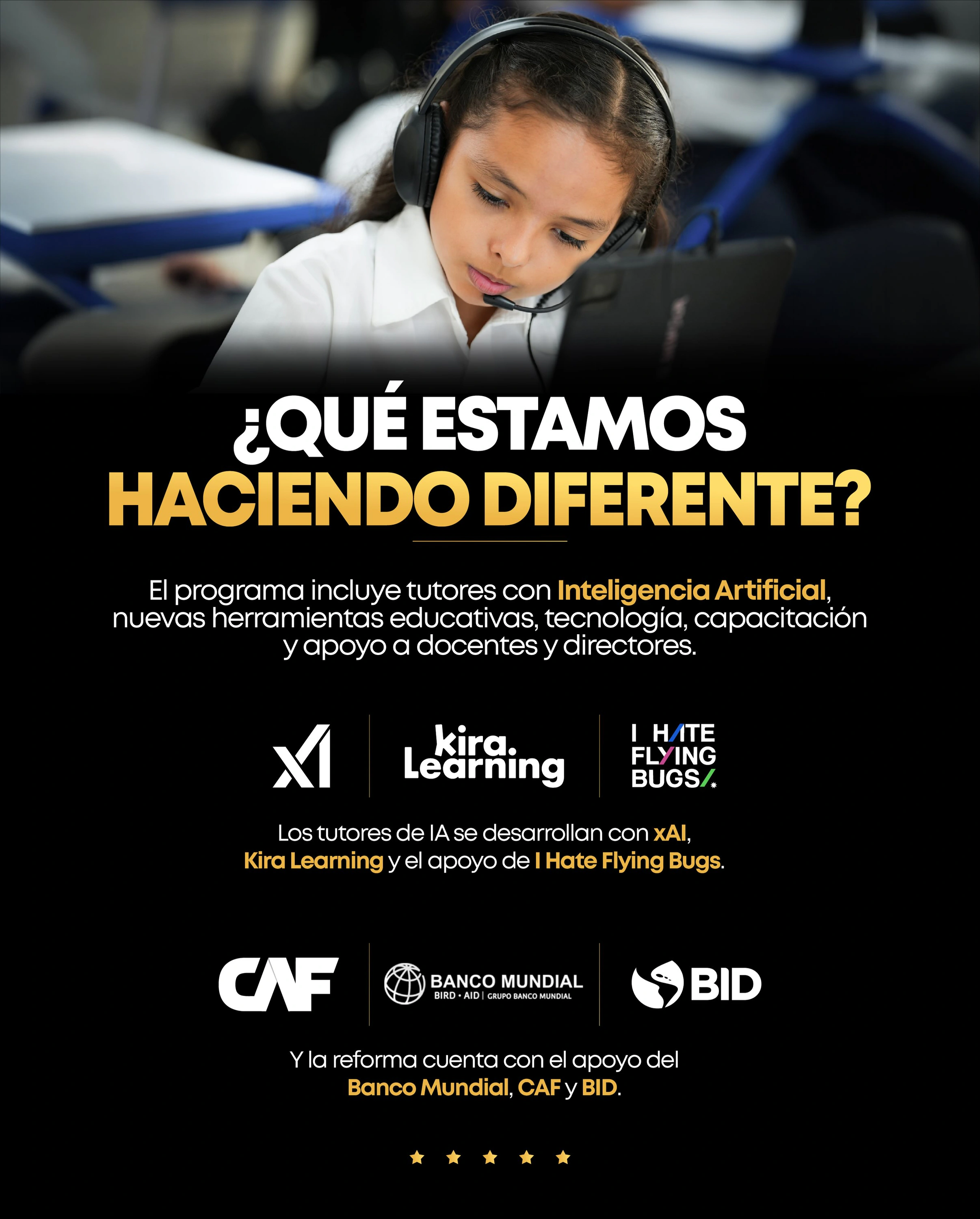
IHFB participates in El Salvador’s national digital education project, supporting local institutions and schools as they bring the curriculum into everyday classrooms.
National public education projects
We compared student lists with actual participants.
We helped teachers start lessons and use the service.
We monitored devices, connectivity, and learning progress, and responded to issues.
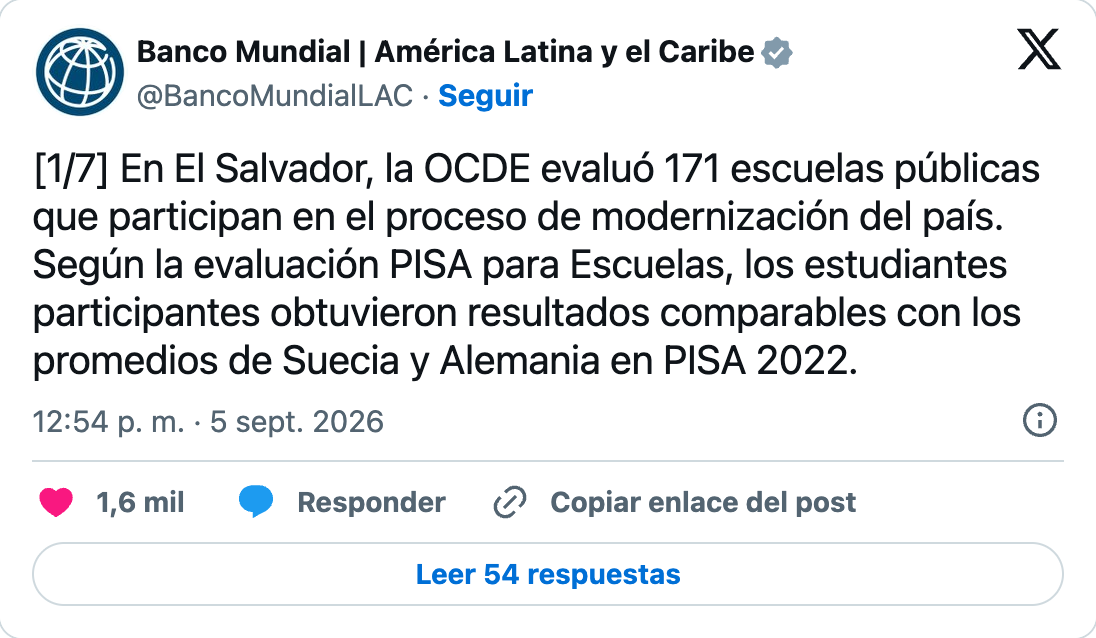
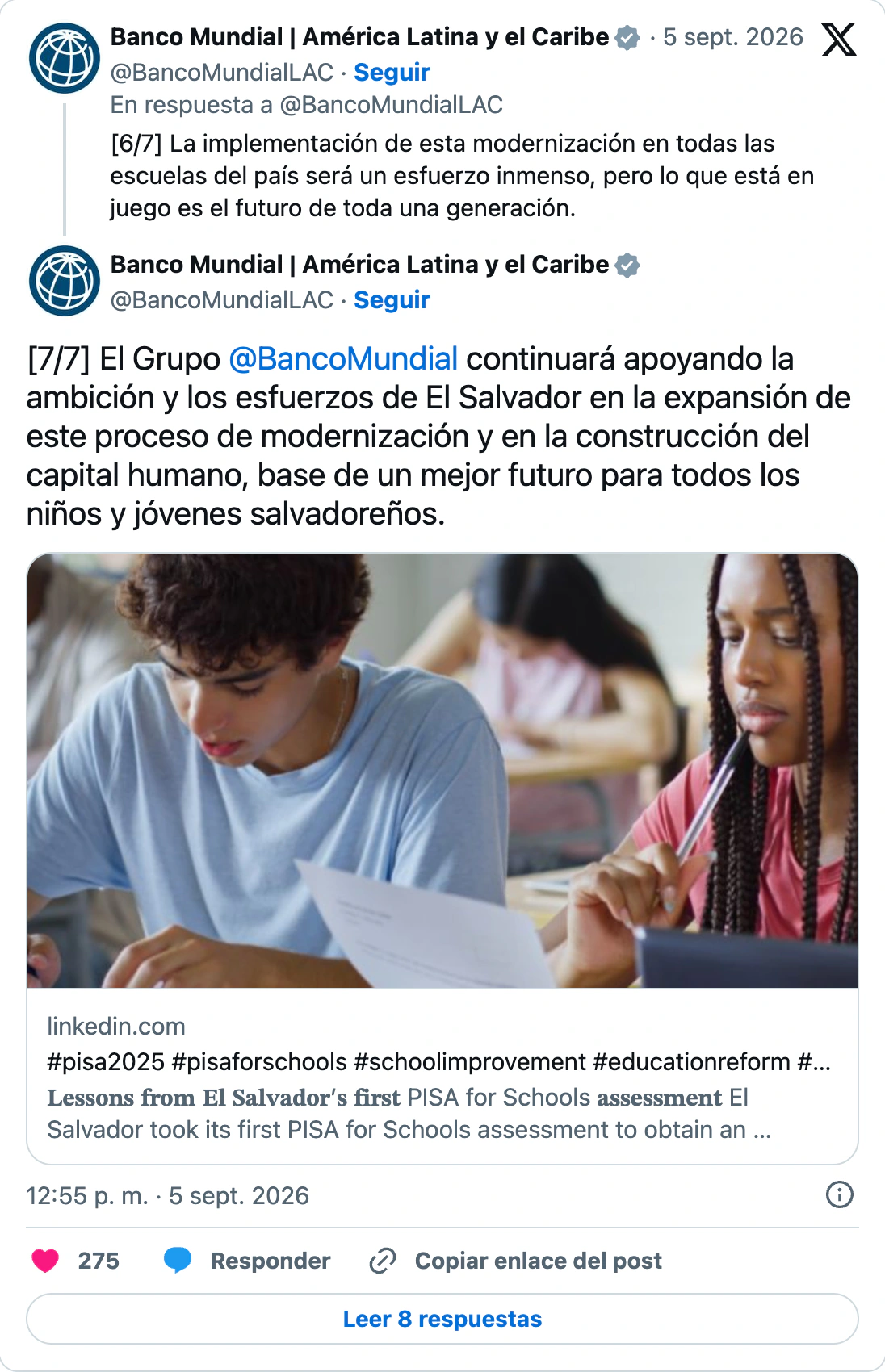
In 2026, 1,198 students from 171 public schools in El Salvador’s Educational Modernization program took the OECD PISA for Schools assessment. Their reading, mathematics, and science results exceeded the national average. The World Bank described the results as comparable to Germany’s and Sweden’s PISA 2022 averages.
Public schools
Participating students
Comparable PISA 2022 averages · World Bank
IHFB is a partner in El Salvador’s Educational Modernization program. On September 8, 2026, President Nayib Bukele named IHFB as a partner supporting the AI tutoring program.
Education modernization in El Salvador is expanding nationwide through the World Bank’s AprendES program.
Student access, device connectivity, and lesson preparation vary by school. We identify difficulties and coordinate support with local staff.
We check student lists, accounts, devices, and connections to help students prepare for class.
We guide service use around each school's teaching practices and respond to teachers' questions.
We distinguish access issues from learning difficulties to identify where technical support or teacher guidance is needed.
Power and network facilities are coordinated with the responsible local parties. Alternative lesson arrangements depend on the school environment.
Global Digital Textbook · Curriculum localization
We review curricula, learning objectives, and classroom language. Local teachers and experts review the content before it is prepared for teaching.
Grades, subjects, and learning objectives
The context of classroom teaching
Classroom feedback and content revision
Use in lessons and feedback
Schedules depend on content volume and rights, review resources, and distribution requirements.
EPaaS · Education operations platform
Connect content, lessons, learning, and operational information. Review accounts, devices, and lesson records together to identify technical and learning support needs.
Student participation and progress
Needs and priorities
Support workload and conditions for expansion
This diagram explains the operating flow. Integration with existing systems and available features are agreed per project.
Before expanding, we examine what keeps lessons running: teacher use, student participation, support workload, and local operating capacity.
Review student lists, accounts, and classroom conditions, and support teachers through the first lesson.
Review teacher feedback and student participation to improve lesson routines and support routes.
Define support levels by school and prepare local team training and responsibilities.
Together, we establish roles and operating practices that local teams can sustain.
IHFB connects curriculum localization, teacher support, and school operations in one implementation plan. We define roles and operating standards for launch, local adoption, and further expansion.
Review curricula, target schools, and classroom conditions to define localization and initial implementation.
Allocate responsibilities for content review, teacher support, and incident response, and establish the flow needed to start lessons.
Review operations and support workload to prepare training, monitoring, and expansion standards that local teams can sustain.
We need the target grades and subjects, curriculum documents, teaching language, and content rights. After agreeing on local expert review and scope, we propose a plan from sample review to classroom use.
We explain implementation scope and partnership options for each project stage, from localization to teacher support and school operations.