[Interview] “This Is Something Even ChatGPT Can't Do... An AI Teacher Who Strikes Up a Conversation First”
CEO Park Chan-yong explained the role of data-driven, personalized education and proactive AI.
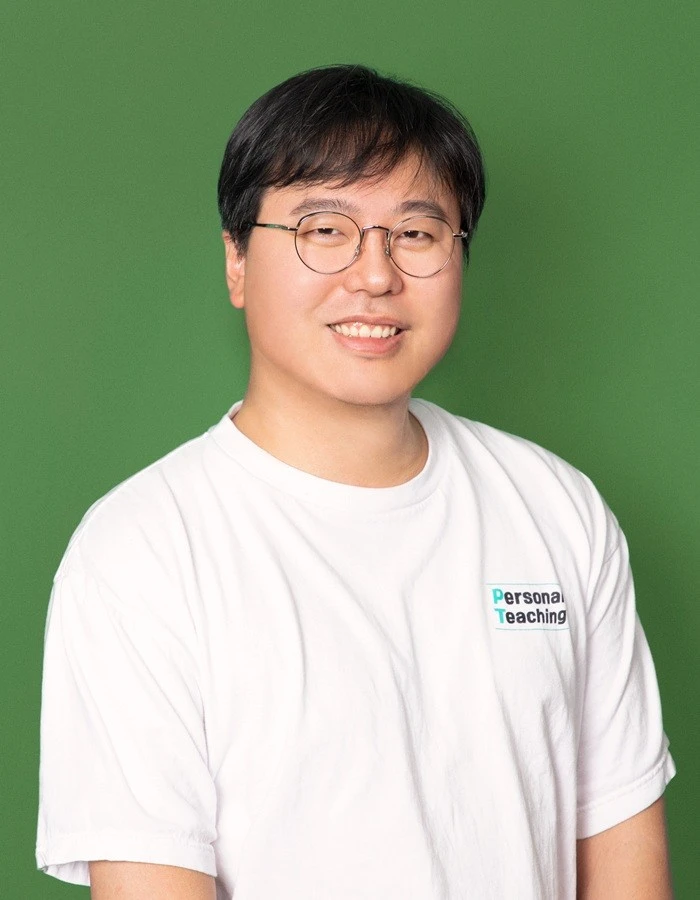
“Academic performance is proportional to the amount of money invested.” Although this theory has not been verified, it is accepted as fact by many students and parents. This is the reason why private education providers—epitomized by the cram schools in Daechi-dong—are reaping massive profits. Private education expenses in South Korea have risen for four consecutive years, surpassing 29 trillion won last year. To resolve the structural problem where “rich fathers raise rich sons,” the public education system must become robust enough to compete. However, there are numerous challenges that need to be addressed, starting with increasing the number of teachers. Park Chan-yong, CEO of I Hate Flying Bugs, who has spent 14 years developing personalized learning technology, says that AI can be a practical solution to drive qualitative change in public education. We sat down with him for a conversation.
—The phrase “Solving the bug of educational inequality” on your company’s website is striking. There is a lot of criticism of the Korean education system along the lines of “If you have money, you get an education; if you don’t, you don’t.” Did this awareness of the problem serve as the starting point for your company? ▶Our company’s most important mission is “equality of opportunity in high-quality education.” While most edtech companies set “equality of educational opportunity” or “equality in education” as their goals, we use a more distinct keyword. We emphasize “high-quality” education, not just education in general. We added the word “opportunity” before “equality.” This is because we believe that universal equality of educational opportunity has already been secured to a certain extent in Korean society. In fact, school education is provided free of charge. Private educational services like Megastudy have also become more accessible, allowing many students to use them at affordable prices.
-So what does “high-quality education” mean? ▶It refers to education that involves direct human supervision. Education that involves direct human supervision, such as in-person cram schools or private tutoring, has a labor-intensive structure, and the associated costs are reflected in the service price, making it extremely expensive. This is not to say that cheaper is better. To realize “equality of opportunity in high-quality education,” it is not a matter of cost-effectiveness; rather, it must be possible to deliver the same quality as high-priced services costing several million won at a level slightly lower than the existing 300,000 won tuition fee. Only then can the business become viable, and as the scale expands, service prices can be lowered again based on profit margins. If private tutoring at 500,000 won delivers 100% results, consumers would never choose a service offered by an education company for 100,000 won that achieves only 80% results.
-What approach are you using to achieve that goal? Recently, many students have been using generative AI. Is your method better than that? ▶Since each student’s learning ability varies, a personalized curriculum tailored to these differences is paramount. Some students only need to practice 10 times, while others must repeat a task more than 20 times. Traditional education has not adequately addressed these individual differences. Since we are now addressing these factors, we can achieve much better results in the area of personalized learning. I don’t think the approach of using generative AI like ChatGPT to solve problems and obtain answers is particularly meaningful, because when you buy a workbook, the solutions are already provided.
-What kind of system do you have in place, specifically? ▶We’re not just a service that displays learning results on a screen and stops there; we’ve established a structure where teachers manage students based on data. Through real-time data analysis, we provide personalized learning for each individual student, and by linking this data to an LLM (Large Language Model), we enable it to make judgments and intervene just like a teacher would. The AI can step in just as a teacher would. Simply put, it takes the initiative to engage with students. We currently hold over 2 billion data points on learning interactions. We also have a platform capable of putting this into practice. This is what sets us apart from general LLM development companies.
-Does this mean AI will replace teachers? ▶It does not replace teachers 100%. Since humans must guide students based on their own will and perspective, the human role remains essential. However, whereas in the past a single teacher could only manage 20 students, using AI agents allows for high-quality management of 50 or even 100 students—and at a much higher quality. We’re providing a higher-quality service at a much lower cost than private tutoring centers. Furthermore, if these technologies are widely adopted in public education, students will be able to receive sufficient support at school without having to attend private tutoring centers.
-K Edu is also gaining attention overseas. How are you formulating your overseas strategy? ▶We need to tailor our strategy slightly differently for each country. In developing countries, addressing basic academic proficiency is the top priority. South Korea’s college entrance exam-focused education system may be suitable for them. On the other hand, services for developed countries require a different approach. We have solutions that can address both scenarios.
-What do you consider to be the ideal profile for talent in the AI era?
▶From the perspective of nurturing future talent, it is extremely important to develop people who can effectively utilize AI. In fact, this should perhaps take precedence over simply receiving education through AI. When you tell AI what to do, it does it immediately; people who are skilled at doing that will gain a competitive edge. However, this is much harder than it sounds. Figuring out exactly what you want is a rather arduous task. In other words, the very act of expressing what one wants in concrete terms is extremely difficult. Ultimately, in future society, self-reflection and communication skills—particularly Korean language education—will become more important than anything else.
-How should such skills be cultivated?
▶ More important than reading are writing and critical thinking exercises. The entire process—clearly identifying what one wants, accurately conveying it to AI, and generating the desired output—is crucial. However, today’s students are not well-trained in articulating what they actually want. This is because the current curriculum focuses on repeatedly solving predefined problems. In the future, the ability for students to define problems on their own and delegate their solutions to AI will become crucial. In the past, this role was reserved solely for those in power. Now, we have entered an era where every citizen must possess this capability.