“Private Education” to Tackle Private Tutoring… Innovation in Public Education and the Use of Private-Sector AI Are Key [Where Is Public Education Headed? ③]
This article examines the use of private-sector AI technology to innovate public education and the associated policy challenges.
https://files.mtn.co.kr/2025/06/02/20250602_hot5_11_mns_720p.mp4
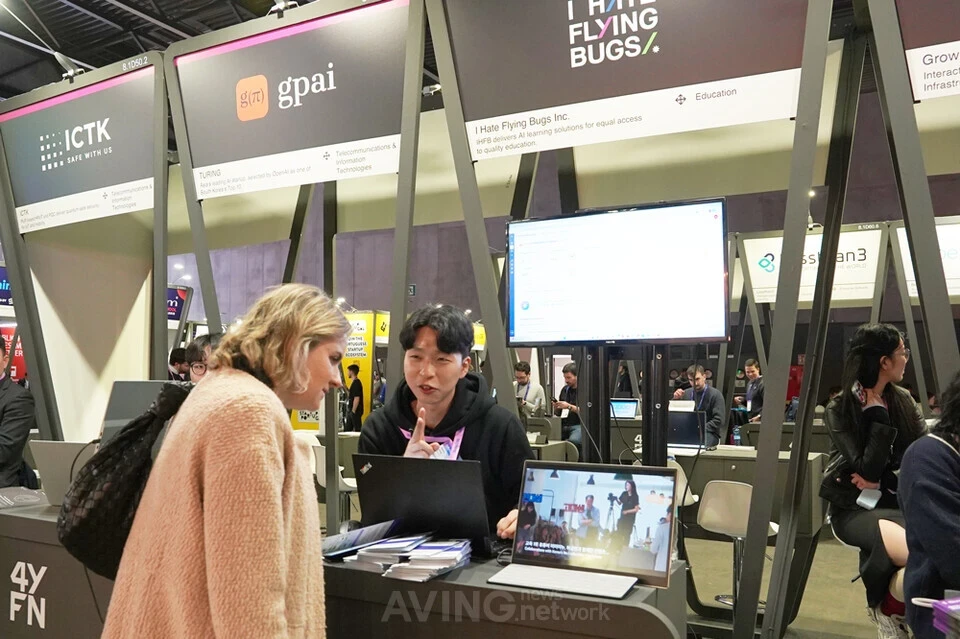
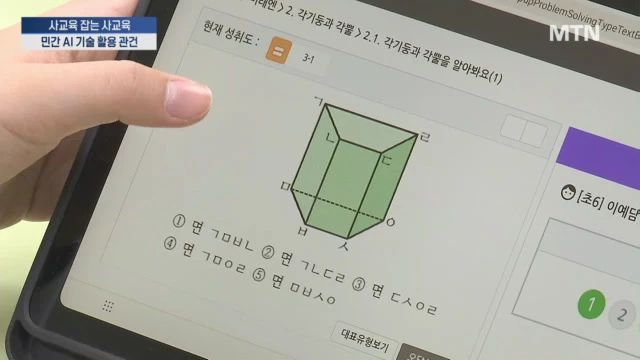
[Anchor Commentary] Artificial intelligence is gaining attention as the “key” to personalized education that can help reduce private tutoring costs. However, some point out that more time and preparation are needed to achieve tangible results. This is the final installment of our “Where Is Public Education Headed?” series, reported by Yoon Seok-jin. [Report] AI is being introduced into school classrooms one after another. AI is establishing itself as a versatile tool that can be used in various ways, such as providing personalized learning and reducing teachers’ administrative workload. This year, the government even earned the title of “world’s first” by integrating AI into textbooks. However, some point out that this is merely the first step. [Park Chan-yong / CEO of I Hate Flying Bugs: “In the case of DKT (Knowledge Tracking Technology), a significant amount of data needs to be accumulated. Currently, AI textbooks are in the stage of amassing a vast amount of data; as this data accumulates, personalized learning tailored to different proficiency levels or students’ current knowledge is being implemented. I hope you’ll understand this.”] There are also calls for the direction of education policy to be clearly defined. In the United States, companies and universities are leading educational innovation, and the United Kingdom is also rapidly integrating private-sector technology into public education. China operates a state-led model in which the government establishes AI education policies and provides concentrated support in terms of budget and infrastructure. Our government is adopting an intermediate model that is state-led but makes limited use of private-sector technology. Because we are maintaining such an ambiguous position, the level of sophistication of the technologies actually being implemented is low, and the pace of change is slow. What is clear is that, regardless of who takes the lead, the core technologies for personalized education are developed by the private sector. Therefore, deregulation and policy support must go hand in hand to ensure that companies can freely develop and supply these technologies. [Lim Geol / Professor, Department of Educational Technology, Konkuk University: “In the field of education, we need investment that involves actively researching, testing, and predicting the future—without shying away from questions such as how AI technology should be applied, to whom and to what extent it should be used, and what precautions must be taken...”] AI has emerged as a solution for reducing private education expenses. To translate technological advancements into educational innovation, it appears that the government’s clear direction must be harmonized with the private sector’s technological capabilities.