IHFB Supports Development of AI Tutors for Educational Reform in El Salvador... Focus on Improving Academic Achievement.
Alongside Elon Musk’s xAI, IHFB—a South Korean AI company personally mentioned by the President of El Salvador—is making waves. Check out their story, which involves 800 schools and 300,000 students.
1,198 Students from 171 Public Schools Take the PISA for Schools Assessment… Results Comparable to the Averages of Students in Germany and Sweden
World Bank Analysis of PISA 2025: “El Salvador’s Improvement Coincides with the Launch of Comprehensive Reforms”… Strong Performance Amid Declining Scores in Latin America
IHFB Partnered with xAI to Develop AI Tutor… IHFB Platform Used by 800 Schools and 300,000 Students
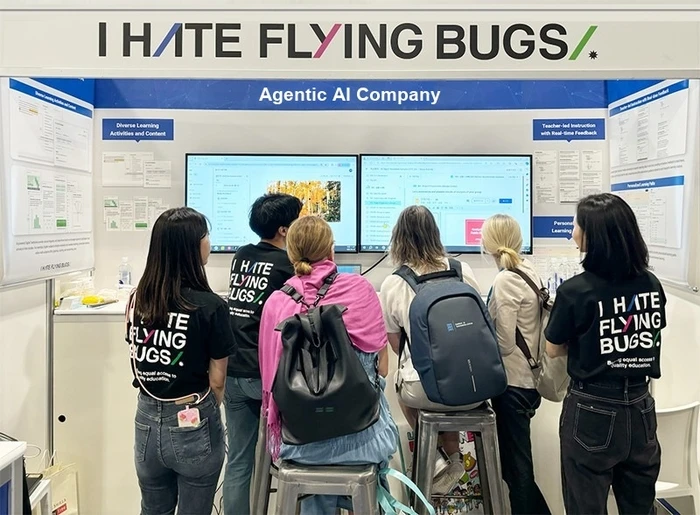
IHFB (I Hate Flying Bugs; CEO Park Chan-yong), an agent-based artificial intelligence (AI) company, announced that its AI tutor—developed as part of El Salvador’s national education reform program—has shown results in improving academic achievement.
According to information released by El Salvador’s President Nayib Bukele, the assessment was conducted in June using the “PISA for Schools” methodology and involved 1,198 students from 171 public schools participating in the education reform pilot program. The assessment covered reading, math, and science, and the students’ results were found to be comparable to the averages of students in Germany and Sweden.
However, this assessment was not a nationwide PISA test covering all students in El Salvador; instead, schools that met the necessary conditions for participation—such as having adequate infrastructure and internet access—were prioritized. President Bukele himself made it clear that these results do not represent the overall educational level of El Salvador.
Signs of improvement were also evident in national-level indicators. According to a PISA 2025 analysis released by the World Bank in September, the average scores of students from 13 participating countries in Latin America and the Caribbean fell by 11 points in reading and 4 points in math compared to 2022. Among these, only two countries—El Salvador and Costa Rica—saw their reading and math scores rise. In science, El Salvador, along with Costa Rica and Uruguay, was among the 16 education systems worldwide that showed a significant improvement in performance.
The World Bank assessed that El Salvador’s improvements “coincide with the start of a comprehensive reform that aligns the curriculum, teaching materials, teacher coaching, and assessment, while making intensive use of technology.” Teacher attendance rates have also improved. President Bukele stated that teacher attendance at schools participating in the program rose from 76% to 97%.
President Bukele mentioned IHFB alongside xAI as a partner in developing the AI tutors for this education reform. However, he emphasized that the success was not achieved by the AI tutors alone. The program also includes changes in teaching methods, support for teachers and principals, educational materials, monitoring, digital technology, and internet connectivity.
The IHFB platform is an education-specific AI that integrates assessment, concept learning, exercises, feedback, and learning management into a single workflow. Its design prioritizes verifying whether students have completed their daily assignments, allowing teachers to immediately identify students who have not finished their work. According to IHFB, approximately 800 schools and 300,000 students in El Salvador are currently using the IHFB platform for learning.
The Salvadoran government has not yet declared these results a definitive success; instead, it plans to expand the program to all public schools nationwide within the next 18 months to verify whether the same results can be replicated on a large scale. President Bukele stated, “The real test is just beginning.”
Park Chan-yong, CEO of IHFB, said, “No matter how good a lesson is, it won’t translate into good grades if students drop out halfway through. It’s the accumulation of days where even a day’s worth of ordinary study is completed without fail that makes a difference in the results.”
He went on to say, “Educational AI will evolve beyond a mere tool for delivering content into an educational operating system that brings students, teachers, content, and data together,” adding, “We will demonstrate through the nationwide rollout in El Salvador that educational AI developed in South Korea can function effectively even in public education systems with entirely different languages and environments.”